
Written by: WSCL Marketing Team
A Western State Story Three Generations in the Making
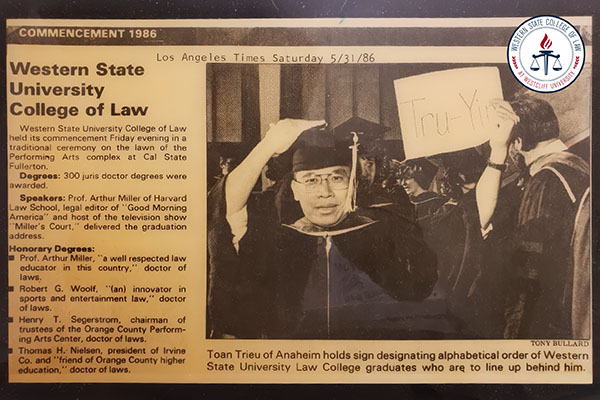
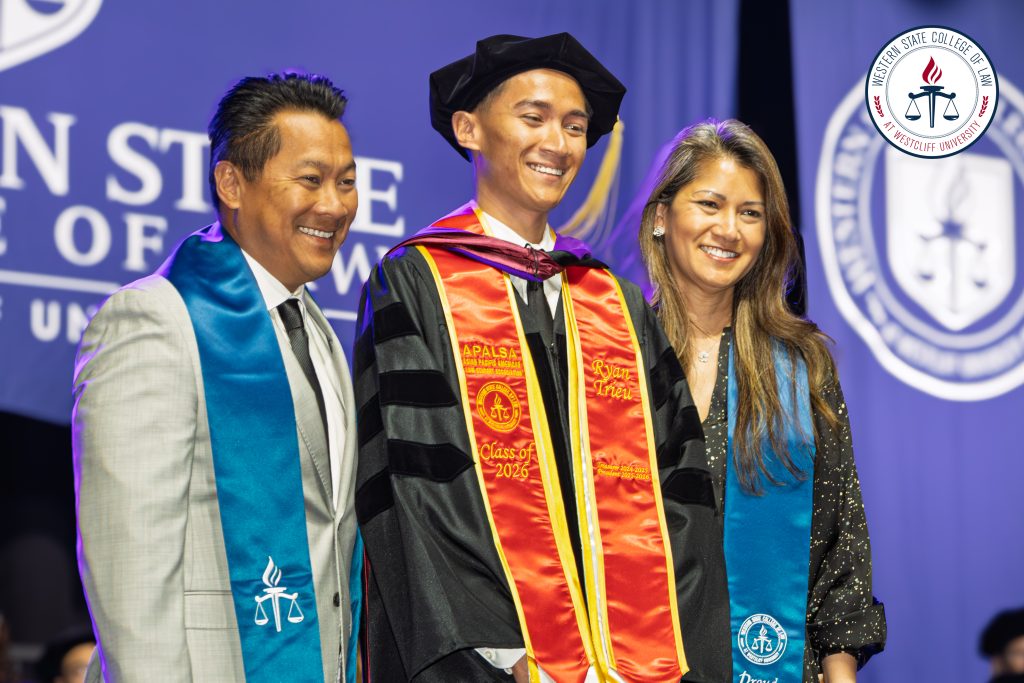
Long before Ryan Trieu started his law school journey, Western State College of Law, the oldest law school in Orange County, was already part of his family’s story. Ryan, who graduated in May 2026, is the third generation of his family to attend Western State, following his father, John Trieu, and his grandfather, Toan Trieu. Their experiences made the legal profession feel close to home.
Growing up in Orange County, California, Ryan noticed that many local legal professionals had ties to Western State. “I really cherish that there’s a local community here,” he says. “People who went here really care for the school and the local community.”
Ryan wanted to remain in Orange County and build his career there. Given his father’s experience at Western State and that of a close friend who also attended, it became a natural choice for the institution he’d attend for law school. “I always knew I wanted to go here because I wanted to stay in Orange County,” he says, “and I knew that the school was very connected to Orange County.”
By becoming the third generation of his family to attend Western State, Ryan inherited a strong legacy. His years on campus showed him how to carry it forward in his own way.
Finding His Own Path to the Law
Ryan’s decision to go to law school developed gradually through his interests in reading, writing, research, and debate. As a political science major, he enjoyed work that was centered on language and ideas. “I really liked aspects of the law, like debating, arguing, and just researching,” he explains. “I thought, ‘Okay, I think this would be a good fit.’” Although his family’s connection to law helped point him in that direction, Ryan ultimately chose the legal path for himself. By the time he arrived at Western State, he was particularly drawn to family law, personal injury, and workers’ compensation.
Rather than having every step perfectly mapped out, law school taught Ryan to be open to different experiences. “Sometimes the things you don’t expect that happen to you can be really great,” he says. “Those experiences can shape you in a way you may not expect, but you should be welcoming to it.” That openness became especially important as Ryan took on leadership, discovered community, and found a deeper understanding of himself at Western State.
Turning Presence Into Leadership
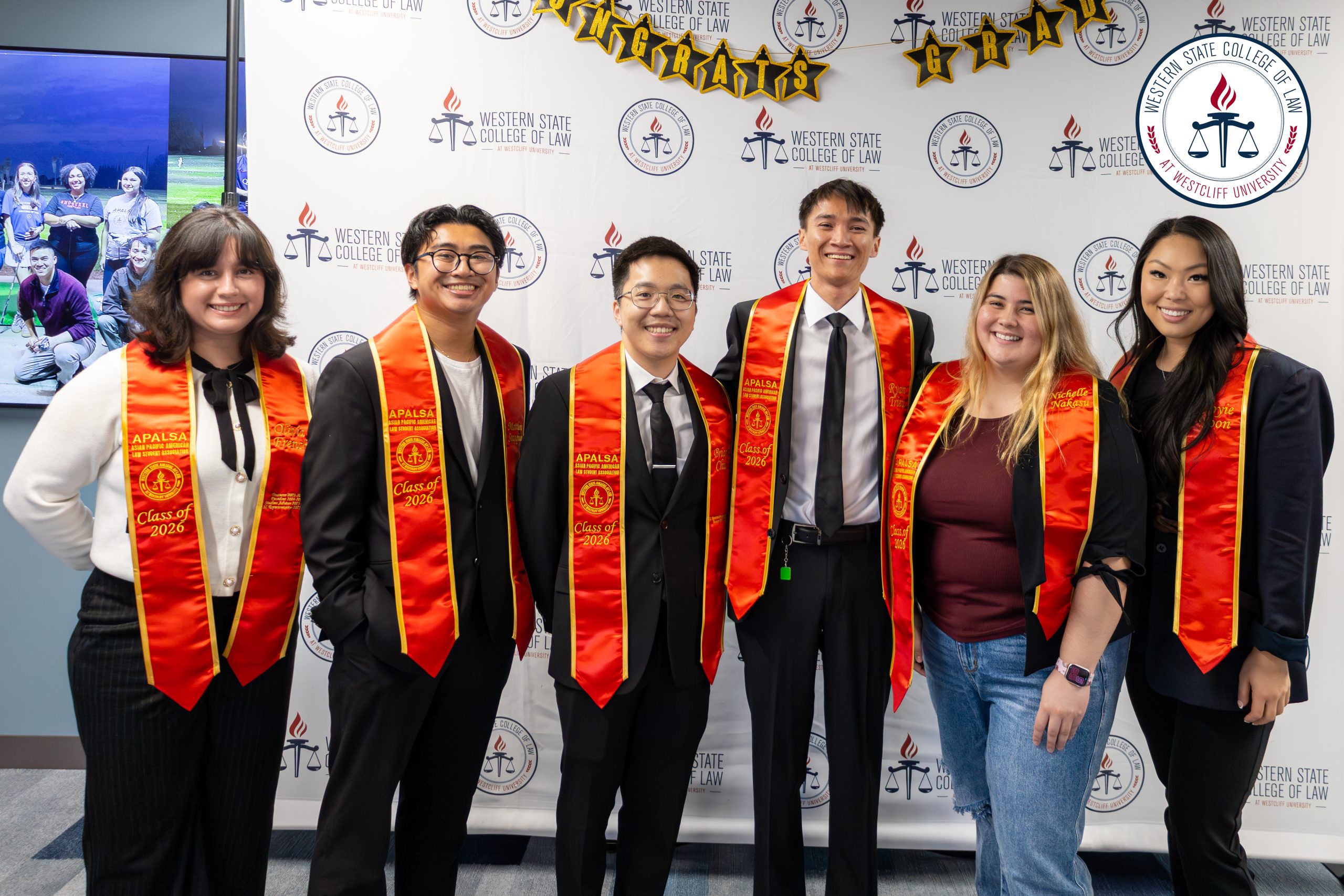
On campus, Ryan found his most meaningful leadership role as President of the Asian Pacific American Law Students Association (APALSA). He also served as Parliamentarian for the Student Bar Association. Leadership, to him, meant becoming someone others could count on. “My main goal is community,” he says. He wanted APALSA members to see familiar faces, feel comfortable, and build unexpected friendships.
Leading APALSA also taught him how much effective leadership depends on collaboration. Ryan credits his executive board, especially his Vice President, Matthew Secoquian, with helping move ideas forward. “That’s what having a board is about. That’s what having a team is about,” he explains. “No one person can really do everything by themselves.” The experience allowed Ryan to lead while maintaining his academics-first outlook. And he encouraged the e-board and members to always put their schoolwork before all else, especially when they felt overwhelmed. “School comes first,” he asserts.
Looking back, Ryan hopes he will be remembered as someone who was there for everyone and helped keep campus life moving. He saw campus energy grow between his 1L and 3L years and is proud that his class helped create more opportunities for connection.
Turning Presence Into Opportunity
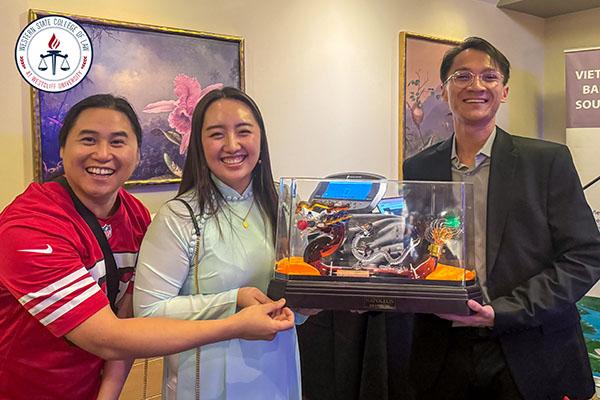
Ryan’s commitment to community extends beyond campus. Throughout law school, he connected with local Asian American legal communities through organizations including the Vietnamese American Bar Association of Southern California (VABASC), Filipino Lawyers of Orange County (FLOC), and the Orange County Asian American Bar Association (OCAABA), while also attending events hosted by the Orange County Bar Association (OCBA).
Networking events didn’t always feel productive. Ryan sometimes felt dissuaded when it seemed as though he had not accomplished much, met anyone, or found an immediate opportunity. But over time, he realized that networking is less about what happens at a single event and more about building familiarity by consistently showing up. He advises other students to keep showing up, even when the first few experiences feel uncomfortable. “Even if you don’t talk to anybody, if you’re just there,” he explains, “the organizers will notice and appreciate you coming.”
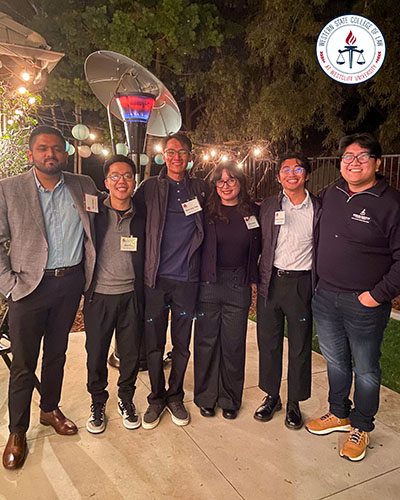
As Ryan became more comfortable in those spaces, he began helping students who were earlier in their law school journeys navigate them as well. “I was able to do for others what I can’t do for myself,” he explains. Helping another student gives him a reason to approach someone, make an introduction, and turn an intimidating room into a more welcoming one.
Ryan also recommends volunteering at professional events, where students can interact with attorneys and peers from other law schools. By his final semester, he saw the value of the connections he made when they came full circle. At a Western State alumni mixer, attorneys he met through the legal community told him their offices were hiring. The experience reinforced what Ryan had learned: opportunities often grow from relationships built gradually, simply by continuing to show up.
Finding a Stronger Sense of Identity
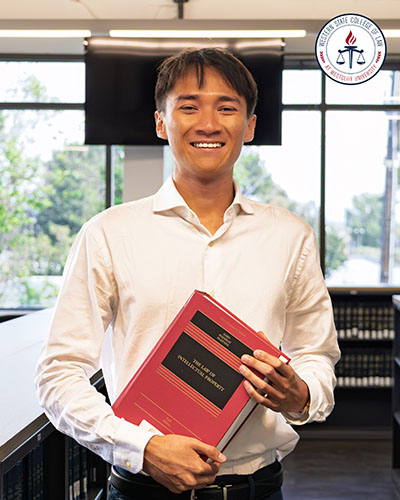
Leading APALSA helped Ryan strengthen his connection to his Vietnamese and Asian American identity. Growing up in a predominantly white community, he often felt disconnected from aspects of his culture. At Western State, APALSA gave him space to explore that identity alongside students from diverse backgrounds. “Being part of APALSA and aligning more with my Asian heritage and identity has been something I’ve made huge steps with here [Western State],” he says. “At the end of the day, I am Asian. That’s still who I am.”
His personal growth also expanded his empathy for communities beyond his own. Through student panels, he saw that different groups experienced similar legal and social challenges. Learning about another community’s experience, he says, can help someone better understand both that community as well as their own. In reflecting on Asian American and Pacific Islander Heritage Month, Ryan also appreciates for Western State’s heritage month spotlights, which make it easier to learn about his classmates’ backgrounds and experiences.
For prospective Asian American and Pacific Islander law students, Ryan’s message is encouraging. “If you’re somebody who really wants to give back, there are so many ways you can do it in this field of work,” he says. “Definitely go for it.”
Preparing for Family Law and Beyond
After graduating from Western State in May 2026, Ryan turned his attention to the bar exam and the family law career he hopes to build. His academic experience strengthened both his interest in the field and his confidence as he prepared for the bar exam. His Family Law elective with Professor Andrew McKeown proved very valuable, giving him “really good exposure to family law.”
Ryan also felt that bar preparation was a consistent goal throughout law school, with professors continually emphasizing foundational rules and the basics. By his final semester, the challenge no longer felt mysterious. “I just have to do it now,” he says. His closest friends played an equally important role. “We support each other, but we also push each other,” Ryan says. Studying with peers exposed him to different interpretations and tested everyone’s reasoning.

That collaborative spirit is what makes Western State stand out for Ryan. He describes students and faculty as down-to-earth, personable, and approachable. He admires classmates balancing work, children, families, and evening classes. His advice reflects what helped him most: “Don’t tackle it alone.”
When he needs to take a break from the pressure, Ryan goes surfing. What began as something fun when he was younger became a peaceful outlet during law school, clearing his mind and helping him return with greater focus.
Carrying the Legacy Forward
Ryan Trieu hopes to begin his legal career by clerking for a family law judge. Having worked with judges before, he sees the value in learning from the courtroom and watching how different attorneys approach their cases. “That knowledge and that experience being shared with me would be invaluable,” he says.
From there, Ryan hopes to join a firm and eventually become a named partner in Orange County. His goal is also connected to representation: at a bar association event, a speaker noted that Asian surnames remain less visible in firm names. The point stayed with Ryan. “The representation, the presence, is meaningful even if you don’t think it is,” he says. “It really is to somebody.” He imagines a young person seeing a Vietnamese surname on a firm sign and suddenly envisioning a future that now feels possible.
Ryan also plans to stay connected to Western State, hoping to return as an APALSA panelist or sponsor and help strengthen the school’s presence within local bar associations. His father modeled what it meant to be a natural presence in the legal community, and Ryan is ready to build on that example.
His Western State story began as a family legacy, but it has become distinctly his own: grounded in leadership and community, strengthened through identity, and guided by the belief that presence can open doors. As he steps into the next chapter, Ryan will carry forward three generations of connection and a commitment to make the legal community more welcoming for those who follow.