Written by: WSCL Marketing Team
A Legal Path She Did Not Expect

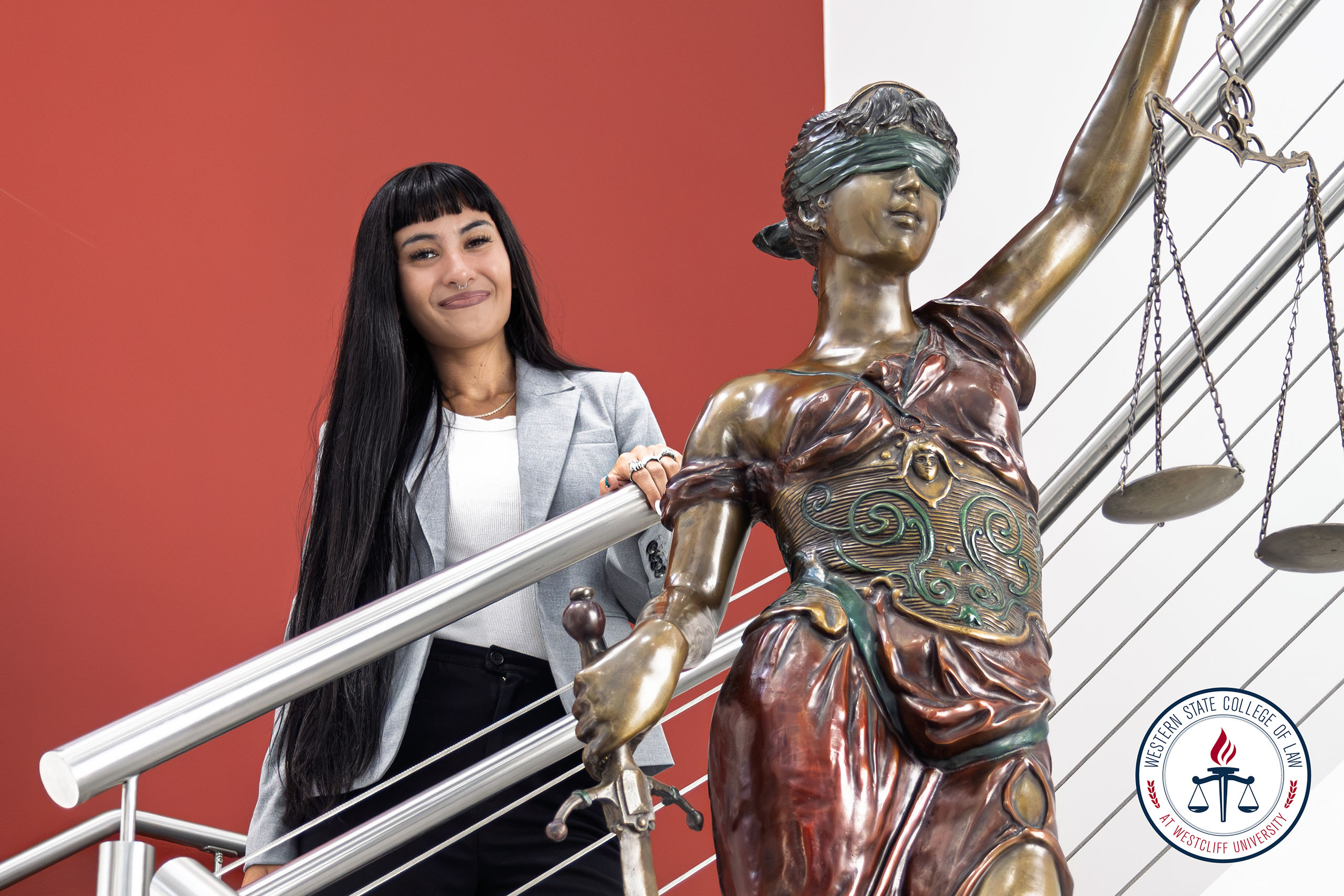
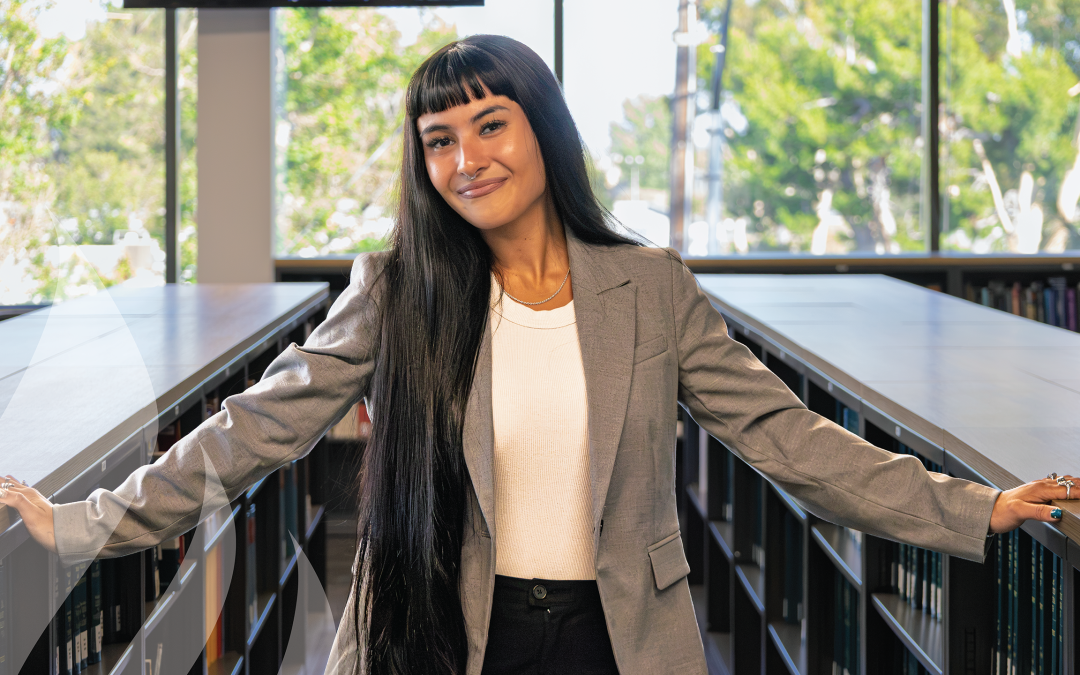
When Juliet Poucher started graduate school, she never thought that a temporary job she held would redirect her future. In 2022, while pursuing a master’s degree in English, she began working as a legal assistant just to earn income. The experience would soon change her entire trajectory.
Through client calls, medical records, and the stories behind each case, Juliet began to understand how deeply legal advocacy could affect a person’s life. She also saw that the work required abilities she valued: writing, research, and analytical thinking. “I really started to look at the impact of that work, and it did feel really rewarding,” she recalled.
Watching her boss practice law made the possibility feel real. Her boss, a Western State alumna who had worked as a nurse for more than 20 years before law school, had made a major professional pivot. “She really gave me the confidence that I had what it took to go to law school,” Juliet says.
Seeing her boss’s example made it easy for Juliet to choose Western State College of Law for her legal studies. Juliet wanted to build a career in Orange County, serve people in the community, and attend a law school with strong local roots. Western State’s history as the oldest law school in Orange County added to that fit. What began as an unexpected introduction to legal work became a clear path toward advocacy.
Where Science, Story, and Advocacy Meet
As a rising 3L, Juliet is most interested in medical malpractice, personal injury, mass torts, and environmental law. She says that these are areas that require attorneys to understand fields outside of the law, and this appeals to her. “You’re basically having to learn a whole other area of knowledge outside of law, whether it’s medicine, chemistry, automobiles, or architecture,” she explains. Juliet enjoys entering an unfamiliar subject, studying it closely, and learning enough to advocate effectively for someone whose case depends on that technical knowledge.
Medical malpractice is currently at the top of her list. She has seen how her boss’s nursing background informs the way she questions experts, and that combination of knowledge and legal strategy has inspired her. Juliet is also interested in environmental law and the scientific questions that it gives rise to.
While learning the complex topics in these fields is what Juliet loves, she also understands the impact it can have on plaintiffs, who face specialized, intimidating information that is difficult to navigate without help. “It’s especially hard for plaintiffs to advocate for themselves when it involves such a complex study of science and law,” she says. For Juliet, that complexity makes it her responsibility to understand the technical details well enough to explain them clearly and advocate for her clients. “That’s something I think I’ll have a lot of pride in,” she says, “being able to advocate on that front.”
Growing OUTLaw Through Community and Allyship

Juliet’s commitment to advocacy also shines through her leadership at Western State, where she was just elected 2026–2027 President of OUTLaw after previously serving as treasurer. She plans to build on the work of prior leaders Melanie Nunez, Karlee Wilkinson, and Niko Gonzalez.
Her goal is growth: more members, more conversations, and a community that welcomes students without asking them to define or disclose their identity. “OUTLaw is for everyone,” she says. “ Ally membership in clubs like OUTLaw is so important, because it helps all individuals, including those who are not openly queer, feel more comfortable finding community and empowerment in an affirming space, which is so essential to have in law school.” Allyship is something Juliet believes is central to lasting change. She wants OUTLaw to hold more events, fundraisers, speaker programs, and to collaborate with other student organizations on campus, creating opportunities for the wider Western State community. The organization hosts annual activities, including drag brunch and a coffee fundraiser. Juliet plans to do more of these activities and explore what will make a wider range of students feel welcome to join OUTLaw events.
Although she’s a strong leader, Juliet believes leadership does not come naturally to her. “Leadership roles are very much out of my comfort zone,” Juliet explains. Yet that discomfort is part of why she took on the responsibility. For her future legal career, she wants to become more confident in guiding a group and speaking with purpose. Being the President of OUTLaw allows her to essentially practice for when she steps into her career. To her, effective leadership means “being able to bring people together and foster a community,” which is exactly the environment she hopes OUTLaw will continue to become.
Making Pride a Life-Long Commitment
Celebrating Pride Month is important, but Juliet believes recognition should extend beyond a month. She is grateful that Western State highlights LGBTQ+ students, alumni, and faculty during Pride Month, while emphasizing that inclusion must be practiced year-round. Inspired by the words of Marsha P. Johnson, Juliet says, “Pride is not just a month. It’s a 365-day-long commitment.”
For Juliet, that commitment means creating spaces where students can find community without feeling pressured to explain or disclose their identity. “OUTLaw,” she emphasizes, “is open to openly queer students, students who have not come out, and anyone who wants to support the LGBTQ+ community.” She wants students to know that anyone, even those who are not LGBTQ+, can join OUTLaw. “Allyship,” she explains, “is a crucial part of ensuring the LGBTQ+ community feels safe, seen, and supported. This needs to be true all year long, not just during Pride month.”
She believes stronger visibility and communication can reduce hesitation around LGBTQ+ spaces, especially if they don’t identify as such. It can also create opportunities for mentorship, shared experiences, and conversations at the intersection of law and identity. OUTLaw’s relationship with the Lavender Bar Association is one way to expand that access, connecting students to mixers, scholarships, conferences, and mentorship opportunities.
Her vision is ultimately about solidarity. “It’s really just about supporting a common cause and talking more about these issues in law,” she says. “The LGBTQ+ community has been historically intertwined with broader civil rights movements, including movements for racial justice and women’s rights, which further underscores the importance of more students standing in solidarity with the LGBTQ+ community today.” She hopes OUTLaw expands beyond a single group of leaders and stays strong for future students. “We really want to emphasize longevity,” she explained. “The goal is growth and expansion this year.”
Finding Her Voice in Law Review and Leadership
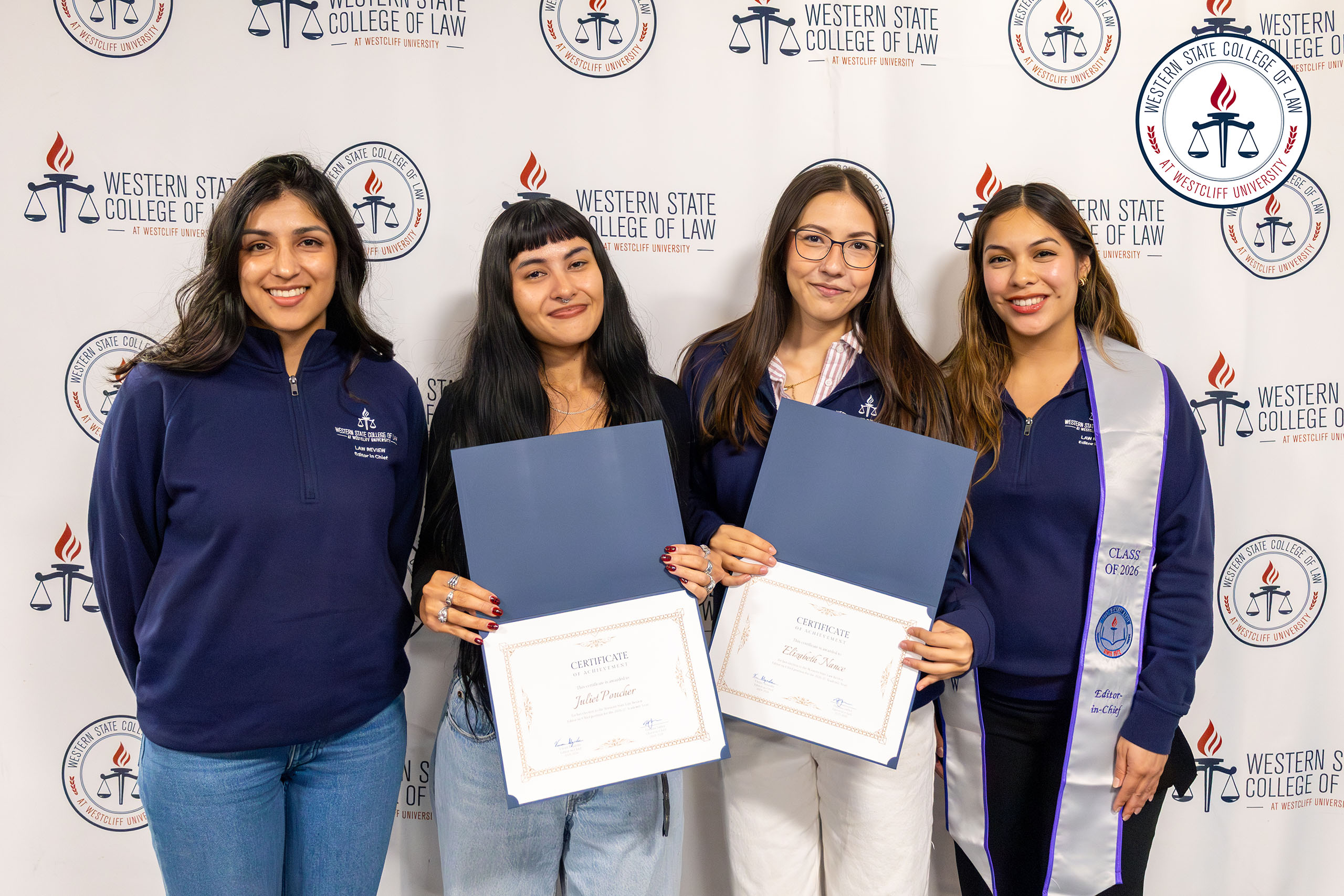
Juliet is also involved in other groups on campus. She will serve as an incoming co-editor-in-chief of Law Review for the 2026–2027 year, a role that draws on the writing and research skills that drew her toward law. She is also involved in a local community legal advocacy clinic and hopes to strengthen OUTLaw’s connection with the Orange County Lavender Bar Association, expanding opportunities for students to find mentorship, support, and professional community.
Writing and reading have long helped Juliet process ideas and reflect, and she has carried those strengths into law school through Law Review and other academic opportunities. She also completed a special research project with Professor Susan Keller that she described as “really interesting.” These opportunities have allowed her to use a personal strength while stretching herself in new directions.
Juliet is inspired by women lawyers who have used their voices with courage and precision. She admires Ruth Bader Ginsburg’s strategic approach to incremental legal change, Gloria Allred’s willingness to take on difficult, high-profile cases for underrepresented people, and Amal Clooney’s work in international human rights. “I’ve always admired, specifically, female lawyers who go against the grain,” she says. During demanding periods, their examples help keep her going. “When I’m feeling really stressed and overwhelmed, I always think of them, and it gives me some comfort in the grind of my own work,” Juliet explains. The qualities she admires, including strategy, fearlessness, and support for vulnerable communities, are also qualities she is developing through her leadership.
What Makes Western State Stand Out
For Juliet, Western State stands out for its combination of community, visibility, and access to opportunity. She describes the law school as tight-knit, with relationships that grow stronger when students join organizations and get involved in campus life. “We have such a strong sense of community and accessibility to opportunities here,” she says. Students can take ownership of their law school experience, pursue work that matters to them, and build relationships that will likely continue well beyond graduation.
Juliet also appreciates that Western State makes a point of recognizing students, celebrating diverse identities, and, of course, the strong California bar preparation offered through the Academic Success Program. She believes student spotlights and other visibility can be especially empowering for those early in their journey. “It makes such an impact to get that type of visibility from your school,” she says.
For LGBTQ+ students, Juliet’s advice is to seek community early and intentionally. She points to OUTLaw, supportive professors, classmates, and student organizations as great places to connect and make new friends. “If you show up as your most authentic self, and you’re not compartmentalizing your identity,” she says, “you’ll have an even more meaningful law school experience here.”
That’s the experience Juliet wants more Western State students to have: a sense of support strong enough that they feel comfortable showing up, getting involved, and finding community in their own time. Through OUTLaw, she hopes to make that easier by creating a space where students can feel comfortable, whether they’re “out” or not.
Looking Ahead With Purpose
After graduation and taking the bar exam, Juliet Poucher’s primary goal is to become a medical malpractice attorney, though she’s still open to personal injury or environmental law. Wherever her career takes her, she wants her work to be grounded in learning, preparation, and advocacy for people facing difficult circumstances and in need of help.
She also plans to stay connected to Western State and OUTLaw. Juliet wants to return for panels, offer mentorship, and be an accessible contact for students still finding their way through law school. “Being able to speak to students who are still going through that journey would be great,” she says. She understands how valuable one professional connection can become.
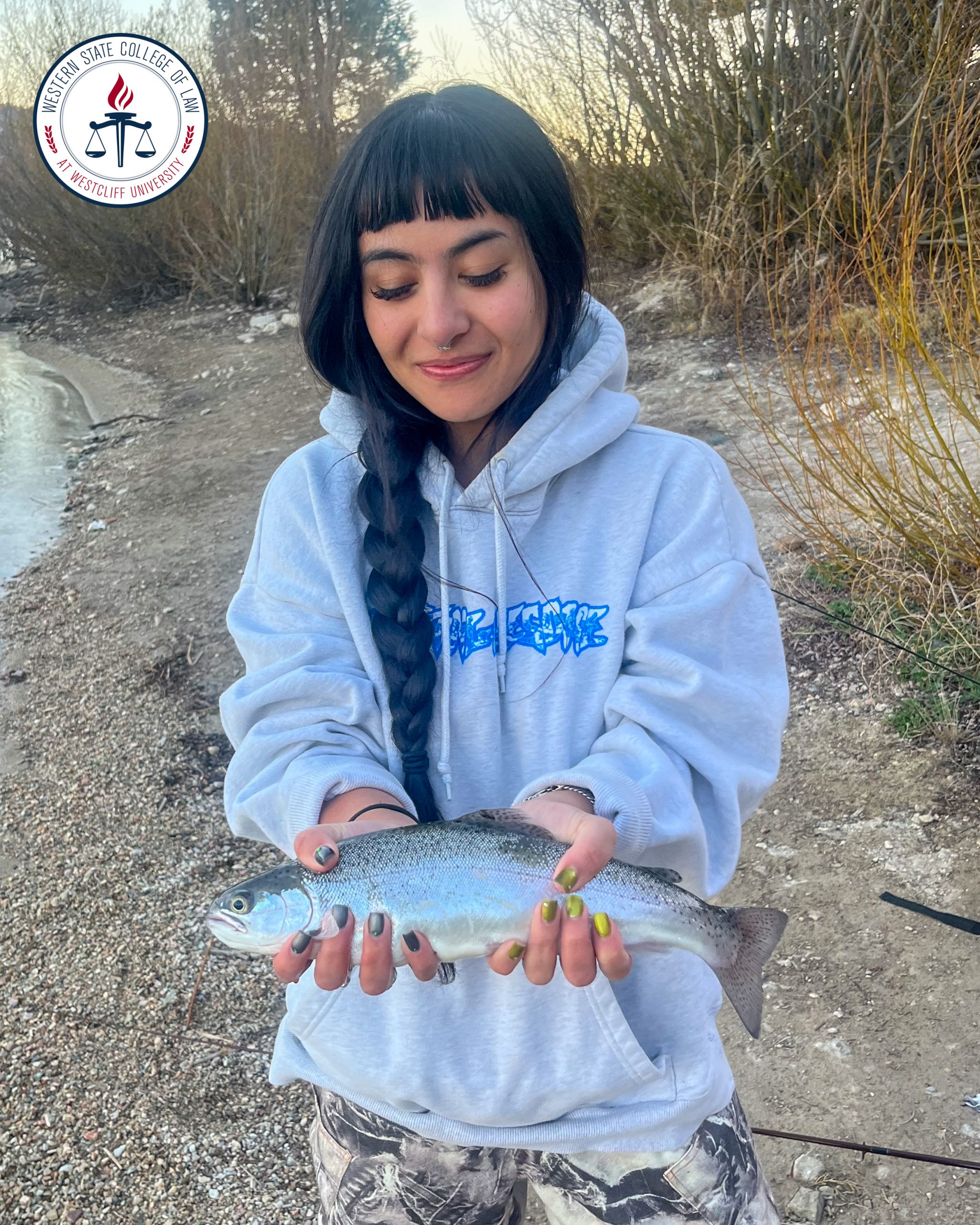
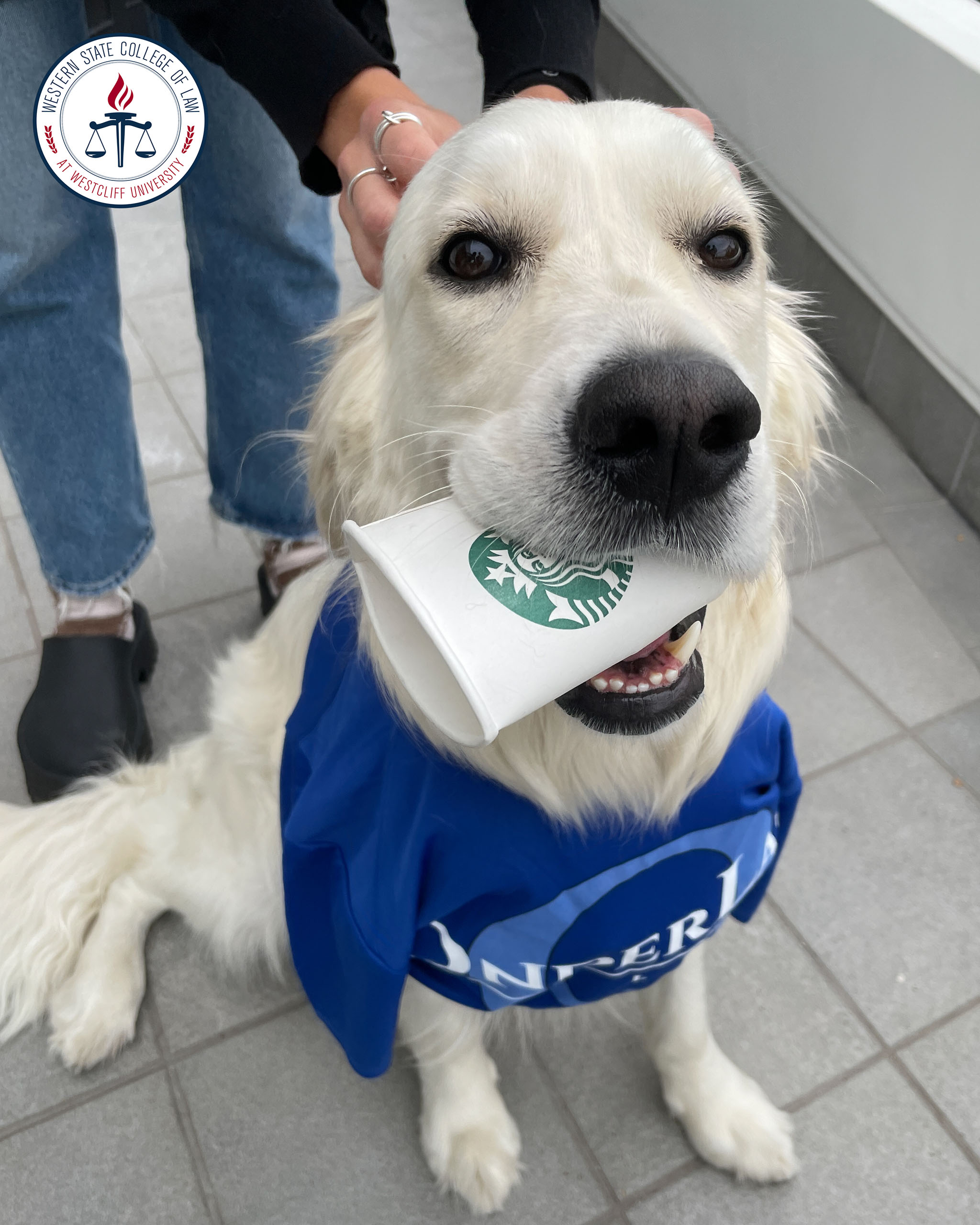
Outside law school, Juliet finds balance through reading, writing, traveling, fishing, and spending time with her dog, Daisy. “Daisy is my lifeline, and she keeps me very grounded,” she says. Taking care of Daisy gives her a reason to take study breaks and spend time outdoors. Traveling and fishing help Juliet disconnect, reset, and return with renewed focus.
That balance will matter as Juliet enters her final year and carries multiple responsibilities. She is preparing for a legal career while helping build a stronger campus community for those beside her and those who will come next. Her invitation to future students is simple: seek community, participate fully, and show up as yourself. Through her leadership, Juliet is helping build a Western State experience where more students feel seen, welcomed, and encouraged to carry that sense of community forward.