
Written by: WSCL Marketing Team
When Macyn Sherman started law school at Western State College of Law, the oldest law school in Orange County, she wanted to make sure she took advantage of every opportunity she had to grow as an advocate. A 2L and first-generation law student, Macyn has already made her mark on campus. She’s on the honors moot court team, serves as treasurer for both the Public Interest Law Foundation (PILF) and the Criminal Law Association (CLA), and is part of Law Review. These experiences have boosted her confidence as an advocate as she became part of the close-knit community at Western State.
Her journey reflects what many prospective students hope to find in law school. It’s an experience shaped by mentorship, involvement, and a supportive environment where students push themselves while helping each other succeed.
Choosing Law School and Finding Purpose

When Macyn started undergrad, she didn’t know she wanted to be a lawyer. She originally thought she’d become a teacher and even spent time working in preschool education. But over time, that changed. “I was limited to the resources within the classroom, and I felt like that wasn’t enough,” she explains.
While working in downtown Long Beach, she became more aware of financial and social disparities in the communities around her. Those experiences stuck with her. “I realized I needed to do something more,” she says. That’s how she decided to go to law school. And when the time came to choose the school she wanted to study at, a friend who had graduated from Western State told her about the school and encouraged her to apply.
After looking into the program, Western State’s vibrant and supportive environment stuck out to her. Now, as a student, Macyn has found a place that challenges her academically, provides her opportunities to grow through leadership and advocacy, and one where she has made friendships that will last a lifetime. “You are with the same 100 people for three years, and you grow friendships very fast,” she says. “I think the community is very special.”
Building Advocacy Skills Through Moot Court
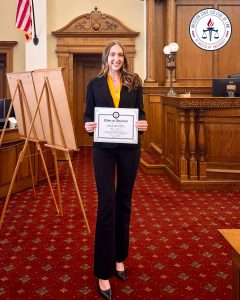
One of the most important parts of Macyn’s law school experience has been her involvement in moot court. As a 1L, she worked very hard to prepare for an oral argument in Western State’s moot court competition. She had to spend hours researching, writing, and practicing. When that hard work paid off and she made the moot court team, she felt a wave of emotions run through her. “I worked so hard during that oral competition, and I ended up making the moot court team, which was just crazy,” she says. “I cried out of fear and also excitement.”
For Macyn, moot court has played a major role in strengthening her confidence in her public speaking. “I love how hard it is because I feel like it prepares you very well for any type of trial work,” she explains. It has also sharpened her legal writing, which she believes is one of the most important skills she will carry into practice.
She noticed the impact of that preparation when she interned with the Riverside County District Attorney’s Office last summer. “I felt prepared to write briefs and motions because of the writing skills I had developed,” she says. “You can really see the difference in someone’s writing when they’ve worked hard in moot court.” Because of what she learned in moot court, she felt prepared to work on legal writing assignments involving briefs and motions. It was one of the places where she saw just how much those skills carry over into real legal practice.
Thinking on Your Feet in Moot Court
Through her moot court experience, Macyn has gained a deeper appreciation for the kind of advocacy that happens in appellate arguments. Instead of simply delivering a prepared argument, students must be ready to respond to judges who interrupt frequently to challenge their reasoning and test how well they understand their case. It’s a different experience than that in Mock Trial, which Macyn explains is where you need to convince a jury rather than judges. “In moot court, you are trying to get a judge on your side,” she says.
That dynamic changes things: Judges can jump in with questions at any moment, so students really need to understand their cases well and be prepared to defend their arguments from different angles. “The judge is going to ask you questions, and they could be the most random questions. You have to be prepared for anything,” Macyn explains. “It forces you to think on your feet.”
For Macyn, that pressure is what makes the experience so valuable. Preparing for oral argument means anticipating questions, refining legal reasoning, and staying focused when the conversation takes an unexpected turn. Her hard work will soon take her beyond campus. Macyn is preparing to represent Western State in an upcoming moot court competition. “We’ll be competing in Ohio in March, so we’re really excited,” she says.

Leadership Through Student Organizations
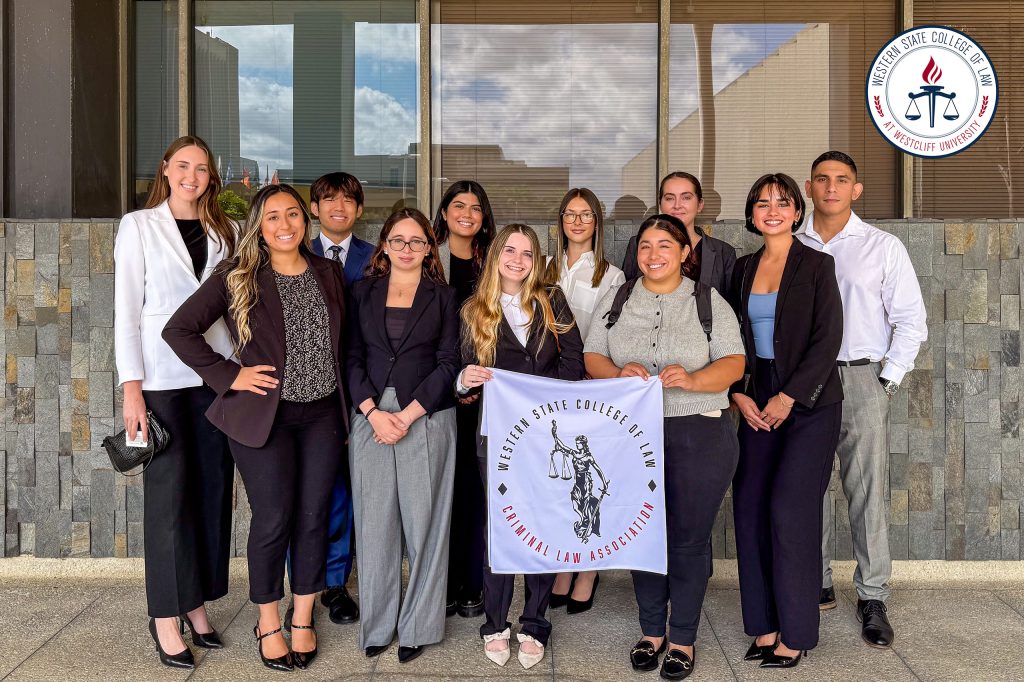
In addition to moot court, Macyn has taken on leadership roles in student organizations at Western State. She serves as treasurer for both the Public Interest Law Foundation (PILF) and the Criminal Law Association (CLA). Through these roles, she gets to support fellow students while helping organize programs and initiatives that prepare them for their legal careers. “It’s about helping other students be able to do that work,” she says.
Her involvement with PILF began during her 1L year. At the time, she still felt strongly connected to her interest in working with children and helping communities through public interest work. One project she helped develop with PILF created a stipend program for students who wanted to do public interest work in the summer but couldn’t afford to do unpaid work. “A lot of public interest jobs are unpaid,” she explains. “We wanted to make it easier for students to take those opportunities.”
The goal was to create a stipend program for public interest roles that future PILF board members can carry forward. “The goal is to just start something,” she says. “Even if it starts small, at least it’s something that future students can continue to build on.”
Why Student Involvement Matters

Macyn believes that getting involved with the community in law school can make a big difference in a student’s experience. “I think students do better in school when they are involved,” she says. During her undergraduate years, she transferred schools and spent much of her time focused on volleyball. While she valued that experience, she sometimes felt she missed out on other opportunities to connect with the campus community. At Western State, she approached things differently.
Taking on leadership roles has improved her time management skills and helped her stay engaged with the people around her. She also understands that getting involved in a leadership role with a student organization can be time-consuming, but the returns make it worthwhile. “It definitely keeps you busy, but it’s worth it,” she says.
Beyond personal growth, Macyn also likes to support newer students. She hopes that through her leadership roles, she can help 1Ls feel welcomed and encouraged as first-year law students.
A Community That Supports Its Students
When Macyn talks about Western State, there’s one word that she mentions frequently: community. She says one of the most important parts of her experience has been the friendships she built early on. “I honestly think I wouldn’t enjoy law school as much if I didn’t have my friends,” she says. Right from orientation, Macyn grew close with a close group of classmates, and they’ve stuck together, continuing to support one another through the challenges they face.
Faculty support has also played an important role. Macyn describes professors at Western State as demanding, expecting students to work hard, but also very approachable and focused on students’ success.
During her first year, she spent many hours in then Professor Eunice Park’s office asking questions and seeking guidance. She also credits Professor Lori Roberts, who leads the moot court program she’s in, as well as Professor Tania Shah, who helps students prepare for oral argument. “Professor Roberts and Professor Shah have been really helpful while we’ve been preparing,” she explains. And that’s the combination of challenge and encouragement that makes Western State stand out to Macyn.
Why Western State Stands Out

One of the first things you’ll notice about Western State is that it’s a small school. And for Macyn, that’s actually a big part of its strengths compared to other schools. It helps create a different kind of law school environment, one where everyone knows each other.
At larger institutions, Macyn says it can be harder to interact with students in different years and classes, or to form relationships outside their immediate circles. At Western State, those connections tend to form more naturally. Students regularly interact with each other, regardless of what year they’re in, which creates a more tight-knit feel, and a sense of shared experience among the students. “It’s a very supportive environment where people want to see you succeed,” she says.
She also appreciates how professors recognize their students. Small moments, like a professor remembering a student from a previous semester, make the experience feel more personal. “Professors really know who you are,” she says. “That’s probably one of my favorite things about Western State.”
For prospective students considering law school, Macyn believes that the supportive atmosphere they’ll experience here will make a real difference.
Balancing Law School With Real Life
Macyn also understands the challenges of law school very well. One lesson she has learned is that life continues outside the classroom, even during the busiest semesters. “Life doesn’t stop when you’re in law school,” she says. Family responsibilities, personal challenges, and everyday stress can actually become even more difficult while trying to balance a field as difficult as law school. Learning how to manage these realities is an important part of making sure you have a healthy balance.
Macyn says that students need to give themselves more time to rest to maintain balance. Law school is demanding, but, as she says, “Law school isn’t your entire personality.” Remembering your sense of self is incredibly important.
Her own routine reflects that mindset. She describes herself as more of a night owl, often studying later in the evening while maintaining a schedule that includes time for the gym and personal activities. But she doesn’t skip on rest: “I believe in sleep. So if you need to sleep at 10 PM because you’re tired, go to sleep,” she insists. Recharging is an important part of maintaining balance in your life.
Advice for Future Law Students

When asked what advice she would give to incoming students, Macyn’s answer comes down to one simple idea: “Ask questions,” she says. “Don’t be afraid to ask questions.”
During her first year, she often felt unsure about expectations and didn’t feel comfortable asking others for help. Over time, she realized that asking for guidance helped her learn faster and feel more confident. “I felt like I was bothering upperclassmen with questions, but it paid off,” she explains. Seeking advice from students who had already gone through the process helped her prepare for exams, oral arguments, and other major milestones during her 1L year.
She believes that the willingness to ask questions can make a world of a difference for students navigating the challenges of law school.
Looking Ahead
Macyn’s achievements also carry personal meaning for her family. “I’m the first college graduate in my family,” she says. “My grandparents immigrated from Hungary, and they’re over the moon about me!” Seeing her go to law school has been a proud moment for them as well as for her mother.
Along with her other activities, Macyn is also involved in law review and is currently writing an article focused on funding for early childhood education programs. She hopes to publish her work in law review next year and wants to explore topics related to criminal law as her interests in the field continue developing.
Looking further into the future, Macyn hopes to remain connected to Western State even after graduation. She would be happy to return for panels, share advice with students, and possibly even teach someday. “I would love to be a professor,” she says excitedly.
That goal feels fitting. Macyn Sherman represents the kind of student who thrives at Western State: motivated, engaged, and committed to helping others succeed along the way.