Written by: WSCL Marketing Team
Where Engineering, Trial Advocacy, and Mentorship Meet
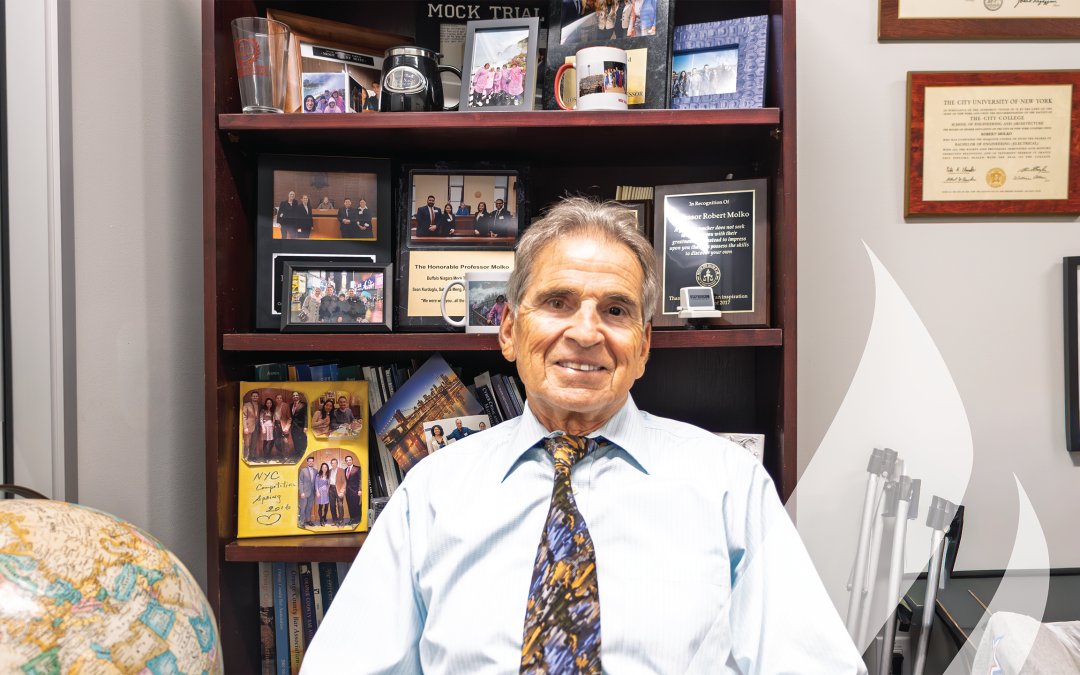
At Western State College of Law, the oldest law school in Orange County, there is a strong emphasis on applying the theory students learn in the classroom to real-life scenarios through practical training. With experience spanning aerospace engineering, criminal prosecution, and trial advocacy, Professor Robert Molko brings to Western State a uniquely practical perspective that has been ingrained in him.
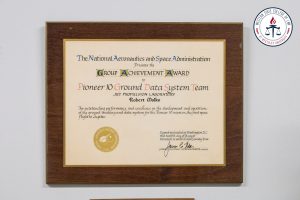
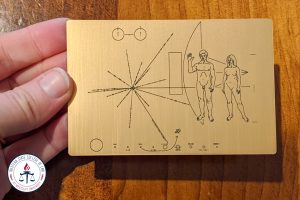
Long before he tried homicide cases or mentored mock trial teams, Professor Molko’s path took him from Alexandria, Egypt, to New York City, and finally to Southern California during one of the most transformative periods in American space exploration. At NASA Jet Propulsion Laboratory, he worked as an engineer on uncrewed planetary missions, including the historic Pioneer 10 and 11 missions. These spacecraft conducted the first flybys of Jupiter and carried gold-anodized plaques intended as peaceful messages to extraterrestrial life. “I was part of a team involved in the Pioneer 10 and 11 missions,” he recalled. “The encounter took place around midnight or one o’clock in the morning. I was in law school at the time, so I worked the graveyard shift to make sure nothing went wrong.” The Pioneer spacecraft are still traveling outward and will eventually leave the solar system entirely.
From Aerospace Engineering to the Courtroom
Professor Molko’s experience as an aerospace engineer gave him a front-row seat to one of humanity’s greatest scientific achievements. He still vividly remembers watching the Apollo 11 Moon Landing happen in real time. “I remember watching Neil Armstrong on TV step down from the lunar lander,” he said. “‘One small step for man, one giant leap for mankind.’ I’ll never forget it.”
Despite the excitement of engineering, Professor Molko felt drawn toward something else. “I decided to go to law school part-time, and it turned out to be the best decision I ever made,” he said, which he did working full-time as an engineer.
That leap led to a career as a prosecutor in Orange County spanning over 30 years. During that time, he tried over 150 jury trials, including homicide and death penalty cases, before transitioning into legal education. Today, Western State students benefit from his unique perspective after decades of experience spanning engineering, criminal prosecution, and trial advocacy.
Why Practical Experience Matters in Legal Education
Professor Molko’s teaching philosophy stems from one core belief: law students should graduate prepared to practice law, not just understand the theory. That belief is what shapes how he approaches his role as Director of the Criminal Law Externship Program and as a longtime coach for mock trial and trial advocacy teams at Western State. “What makes Western State stand out,” he explained, “is the blend. We have academics, but we also have professors with practical experience and practical skills.” This, he explains, allows students to get the best practical training where they put the theory they learn into practice.
Professor Molko strongly believes students develop confidence and practical legal skills through real-world experience. “It’s probably the best thing a student could do in law school if he or she intends to be a trial lawyer,” he said about trial advocacy. “It is the refinement of everything they’ve learned.”
At Western State, those opportunities are built directly into the student experience. Through mock trial, moot court, law clinics, and externships, students learn how to think under pressure, communicate persuasively, and apply legal principles in real-world situations. “The law firms are not very happy with some law schools that do not provide that kind of experience,” Professor Molko explained. “Because they have to train them from scratch.”
For him, practical training is not optional. It is essential.
Inside Western State’s Mock Trial Program
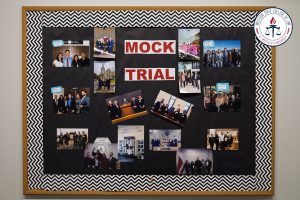
One of the clearest examples of that philosophy can be seen in Western State’s trial advocacy and mock trial programs. Professor Molko has coached students in these programs for years. The work is demanding. Students spend weekends preparing arguments, refining courtroom presentations, studying evidentiary rules, and practicing witness examinations for hours at a time. But the transformation he witnesses in students makes the effort worthwhile. “They develop their skills of presentation, how to react to unexpected situations, and how to generate passion,” he said.
He describes trial advocacy as a uniquely difficult discipline because students need to multitask constantly inside a courtroom environment. “You have to be attentive to what you’re doing, what the other side is doing, what the witness is doing, what the judge is doing, and what the jury is doing all at the same time.” And that’s the kind of skill that simply can’t come from reading a textbook.
Students also learn how to communicate with juries authentically and persuasively, a skill Professor Molko believes is fundamental to becoming an effective trial lawyer. “The storytelling at the beginning and the end, the power of persuasion, developing rapport with a jury, and being able to persuade that jury, that’s what trial advocacy is,” he explained.
At the same time, he pushes students to remain grounded and genuine. “Don’t be cocky, don’t be arrogant, don’t talk down to the jury,” he said. “Talk to people on the same level.”
Building Confidence Through Real Courtroom Practice
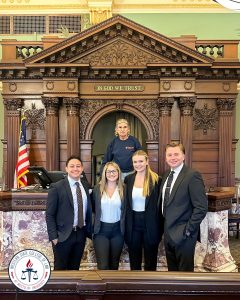
Western State’s new courtroom has become an important part of that learning experience. Equipped with jury rooms, judge’s chambers, PTZ cameras, microphones, and courtroom technology, the space gives students an environment that closely mirrors what litigation settings look like. “What it does is create a realistic setting for students to simulate what it is to be in a real trial court,” Professor Molko explained.
For students, the impact is psychological as much as practical. “It makes the impression on the student that this is what I’m going to be doing in the future,” he said. “This is real.” That realism matters because litigation is incredibly stressful. Professor Molko openly discusses the pressure students experience during trial advocacy exercises to prepare them for it. “We try to run practices like real trials,” he said. “The pressure is on to actually perform.” His goal is not perfection, but rather, preparation.
Learning the Human Side of Criminal Law
As Director of the Criminal Law Externship Program, Professor Molko also helps students navigate another critical dimension of legal practice: the emotional reality of criminal law. Unlike classroom hypotheticals, externships place students directly into offices where real victims, defendants, and families are affected by legal outcomes every day. “It’s no longer simulated,” he explained. “Real people are involved.”
Students may encounter cases involving homicide, sexual assault, child abuse, or juvenile crime. Those experiences can be transformative, both professionally and personally. Some students become even more motivated to pursue criminal law after seeing the impact attorneys can have. Others realize a specific area may not be right for them. “I’ve seen both,” Professor Molko said. “Some are really excited about accomplishing something for the good of the world. Others realize, ‘This is not for me.’”
He believes discovering that distinction during law school is invaluable. “Better to find out now than in the real world,” he said. That honesty is part of what makes his mentorship so impactful. Students are encouraged to develop technical legal skills as well as reflect deeply on the type of lawyer they really want to become.
Mentorship, Accessibility, and Community

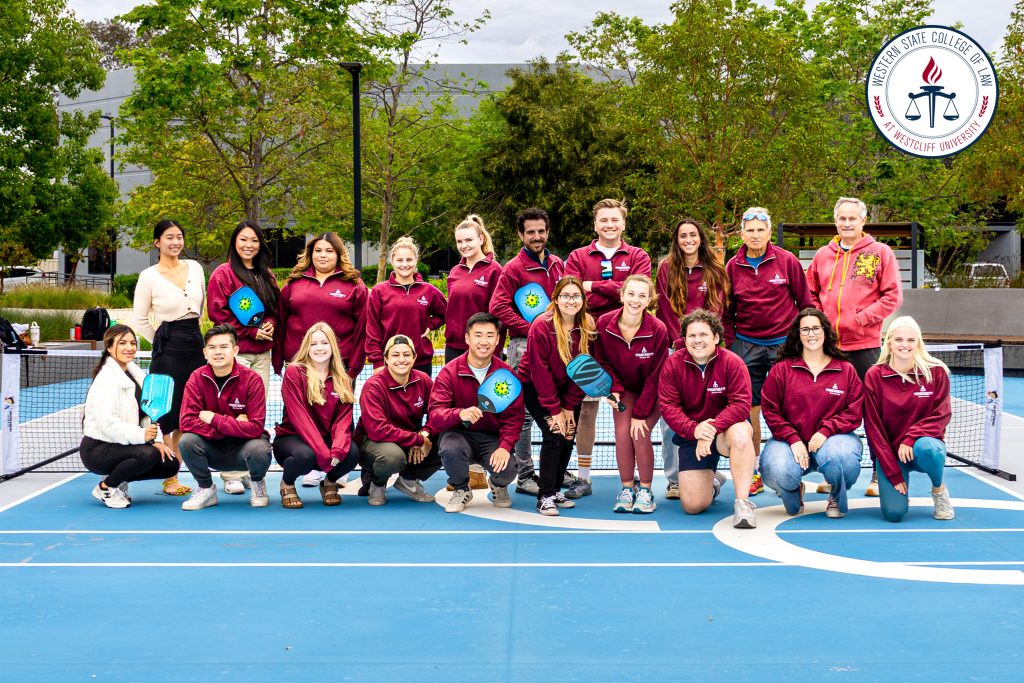
Students frequently describe Professor Molko as approachable, invested, and deeply committed to their success. He maintains an open-door philosophy that extends well beyond standard office hours. “If students want to meet me sometime other than office hours, online or on weekends, anytime that’s mutually convenient, I will meet them,” he said. For him, mentorship is part of the responsibility of being an educator. “I want them to feel that I’m there for them,” he explained. That mindset carries over beyond the classroom and courtroom. When he wants to decompress, pickleball is one of his favorite activities. The hobby has even become part of the mock trial team culture at Western State.
That investment often continues long after graduation. One of his favorite moments as a professor came when two former students called to tell him they were about to face each other in court, one as a prosecutor and one as a defense attorney. “It’s their success that interests me,” he said. “I just enjoy passing the torch.”
That sense of mentorship and personal attention is something he believes truly distinguishes Western State. “There’s a lot of TLC here,” he said. “Tender love and care. Hands-on attention to students to get them to succeed.”
Tikkun Olam and the Responsibility to Serve
Speaking about Jewish American Heritage Month, Professor Molko reflected on the values that have shaped both his life and legal career. One concept that resonates deeply with him is tikkun olam, a Hebrew phrase commonly understood as “repairing the world.”
That idea aligns naturally with the way he approaches legal education and public service. Whether he was prosecuting violent crimes, mentoring students through mock trial competitions, or guiding externship reflections, his focus has consistently centered on responsibility, integrity, and helping others contribute positively to society.
Throughout his career, he has emphasized the importance of doing “the right thing for the right reason.” That perspective continues to shape the environment he creates for students at Western State, one that values professionalism, empathy, resilience, and service alongside legal skill.
Preparing Students for the Real World
Professor Robert Molko’s story is very unique, but in many ways, it reflects the broader mission of Western State College of Law itself. His journey from engineering and planetary missions to criminal prosecution and legal education demonstrates that legal careers are rarely linear. They evolve through experience, mentorship, and a willingness to embrace new challenges.
At Western State, students are encouraged to do exactly that. Through trial advocacy, externships, mentorship, and experiential learning opportunities, students are taught not only how to understand the law; they are also taught how to practice it.
And for Professor Molko, that preparation is ultimately about more than courtroom performance. It is about helping future attorneys discover their strengths, develop confidence, and carry forward the spirit of tikkun olam by helping repair the world through advocacy, mentorship, and service.