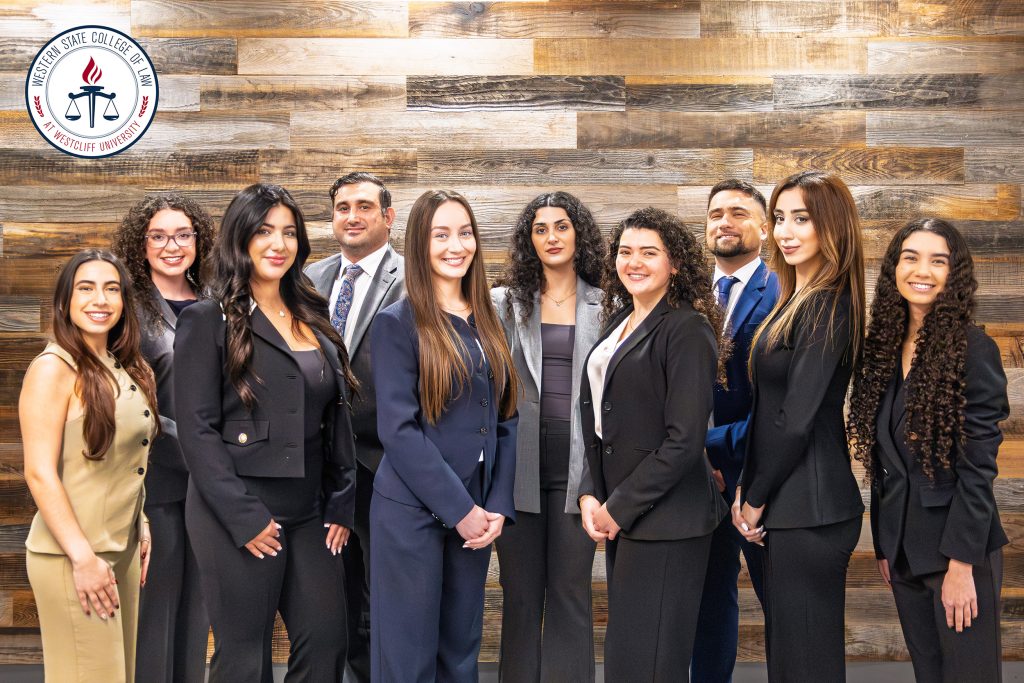
Written by: WSCL Marketing Team
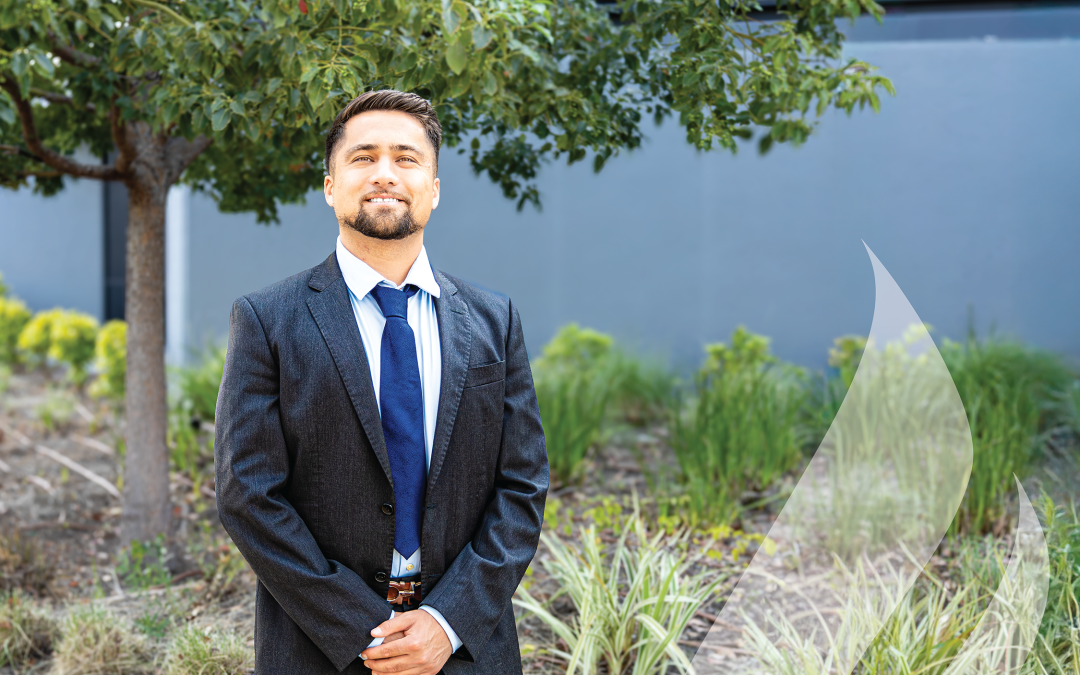
For Mohammad Qayum, a 1L law student at Western State College of Law, the oldest law school in Orange County, the decision to pursue a career in the legal field grew out of a desire to use his skills to make a real impact. After graduating from college, Mohammad initially went into business, helping his family run their business. The experience taught him responsibility, precision, and independence. Yet, something continued to draw him toward law.
“I was always drawn to law,” Mohammad says. “I wanted to use my best skills to better society and make an impact, as small as it may be. And the law felt like the right way to do it.”
That desire to contribute meaningfully, to serve others while challenging himself intellectually, ultimately led him to go to law school, where he now balances rigorous academics with leadership, service, and community-building.
Choosing Western State: Where Community and Opportunity Align
Mohammad’s path to Western State came together at just the right time. He was looking to move back to California, specifically to Orange County, where the ABA-accredited law school is located. While considering his options, Western State extended an offer of admission. “Western State felt like the right school for me,” he explains. “I brought my parents to campus, and they liked it. I also met Dean Cianciarulo, who was amazing. It all aligned and came together. It was perfect.”
As a 1L, Mohammad says his experience has exceeded expectations, particularly when it comes to campus culture. “I don’t dread coming to school,” he says. “I’m excited, and I come in with good energy. It’s not like going into a boring office space. It’s a community.” For Mohammad, that sense of belonging goes beyond friendship; it even shapes how students study, work together, and support each other.
Leading the Muslim American Heritage Month Campaign
In addition to excelling academically, Mohammad serves as Event Coordinator for the Middle Eastern Law Students Association (MELSA). In that role, he took the initiative to lead and put together Western State’s Muslim American Heritage Month (MAHM) content, an effort that was very meaningful and personal to him. “It meant a lot to me,” Mohammad says. “Often, we don’t see Muslims portrayed in a great light in the media. And Muslims are a strong part of American society. So I wanted to change that.”
For Mohammad, leading MAHM was about education, accuracy, and connection. He wanted to highlight moments in American history that reflect inclusion and shared civic values. “I am very proud to be American, and very proud to be Muslim,” he explains. “So I took this opportunity to share beautiful things about Muslims in American history.”
As part of that effort, Mohammad referenced figures such as Thomas Jefferson, whose advocacy for religious liberty extended to Muslims, Jews, and people of all faiths. Jefferson’s writings and public positions helped establish the principle that freedom of conscience was a fundamental civil right, one that was later enshrined in the Constitution. The frieze in the U.S. Supreme Court Building depicts historical lawgivers, including religious figures such as Moses; Mohammad proudly pointed out the inclusion of the Prophet Muhammad.
For Mohammad, it was incredibly important to show positive representations of his religion and the Muslim American community, noting important figures like Kareem Abdul-Jabbar. “I want to share an image that spreads more love,” he explains. His leadership exemplifies a thoughtful, positive approach to advocacy rooted in building bridges, historical context, and mutual respect.
Balancing Law School, Leadership, and Entrepreneurship
Despite the demands of being a 1L in law school, Mohammad continues to help manage his family business. “Being a business owner teaches you how to be independent,” he says. “You begin to understand the world differently, how decisions are made, how to deal with pressure, how everything connects.” His active entrepreneurship sharpened his attention to detail, built his resilience, and taught him what true responsibility is, skills that are essential in the legal field. “It’s not nine-to-five, it’s all day long,” he explains. “If you don’t put the work in, things can fall apart. That pressure teaches you how to set your own path and be independent.”
Balancing everything, however, takes intention. “My bed and I have a very distant relationship during the school year,” he jokes. “It’s really about time management. I like to write things down and triage tasks. And you’re going to have to sacrifice some social events. You have to prioritize your time.”
Still, he feels that being involved with student organizations actually strengthens, rather than diminishes, his academic success. Not only is he an Event Coordinator with MELSA, he is also the Treasurer of the Business Law Association (BLA). “Being part of MELSA, part of BLA, and part of this community at Western State, it makes me a better student,” he says. “It gives me excitement to get up. It makes me want to continue being a strong student. Which means I can’t fail.”
A Support System That Makes a Difference
One of the aspects Mohammad values most about Western State is its academic support system, something he says truly sets the school apart. “The support here is amazing,” he says. “Whether I talk to Dean’s Fellows or other students, people genuinely want to help.”
He recalls struggling after an exam early in the semester and feeling discouraged, until he reached out. “I talked to one of the Dean’s Fellows in my class, and they gave me so much hope,” he explains. “After that, everything went fine. That willingness to help is real at Western State.”
Mohammad encourages students to take full advantage of office hours and mentorship opportunities. “I go to my professors’ office hours all the time, even if it annoys them,” he jokes. “But really, they’re always nice and welcoming.” And that, Mohammad says, is the Western State difference.
Advice for Future Law Students
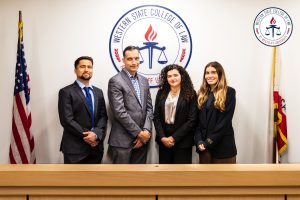
Oftentimes, prospective and incoming students worry about balancing academics with extracurricular involvement. For this, Mohammad offers grounded, practical advice. “If you’re concerned, start by testing your first semester and focus on school,” he advises. “See how much time you really need to put into your studies. Once you get a handle on things, you can get involved in your second semester, when you’re ready.”
He also stresses that organization and self-awareness are critical as a law student. “I’m old-school so I like to write my schedule and to-do lists. Make use of the amazing tools you have, like calendars,” he advises. “Law school extracurricular involvement isn’t like undergrad. It’s less of a burden because everyone’s on the same boat.”
Life Beyond the Classroom
Outside of law school, Mohammad prioritizes staying active and connected. A lifelong soccer fan, he plays regularly and makes time for the gym. “Activity clears my mind,” he says. “It helps my mood, my sleep and my focus.” He also spends time at his local mosque and enjoys hiking, going to coffee shops, and spending time with family.
Born in India and raised in the United States from a young age, Mohammad draws strongly from his Afghan cultural roots and speaks Farsi. He credits his cultural background for shaping his values. “My culture taught me hospitality,” he says. “My mom instilled charity and generosity in me from day one, and that’s stayed with me.”
A Shared Message of Connection
When asked what he hopes people take away from his story, Mohammad points to the importance of connection. That belief is reflected in the student spaces he is most involved in. Through MELSA, he has found a community that brings together students from a wide range of cultural, religious, and national backgrounds. While the organization centers on Middle Eastern experiences, its mission is rooted in creating an inclusive and safe space grounded in learning and mutual respect.
For Mohammad, that diversity is fundamental. It reinforces his belief that building community is about accepting our differences and recognizing the shared values we have alongside them. “All of us, Muslim, Christian, Jewish, whatever our background, we have a lot more in common than we have apart,” he says. “Focus on loving each other. Find similarities and common ground. The more love you give, the more you receive.”
And this philosophy that shapes Mohammad’s character also embodies the spirit of the Western State community itself.